
Smart Bird Feeder Cameras in 2026: What Actually Matters Before You Buy
Focus distance, mounting design, real battery numbers, species ID limits and looks: the five things that separate a smart bird camera you keep using from one that ends up in a drawer.
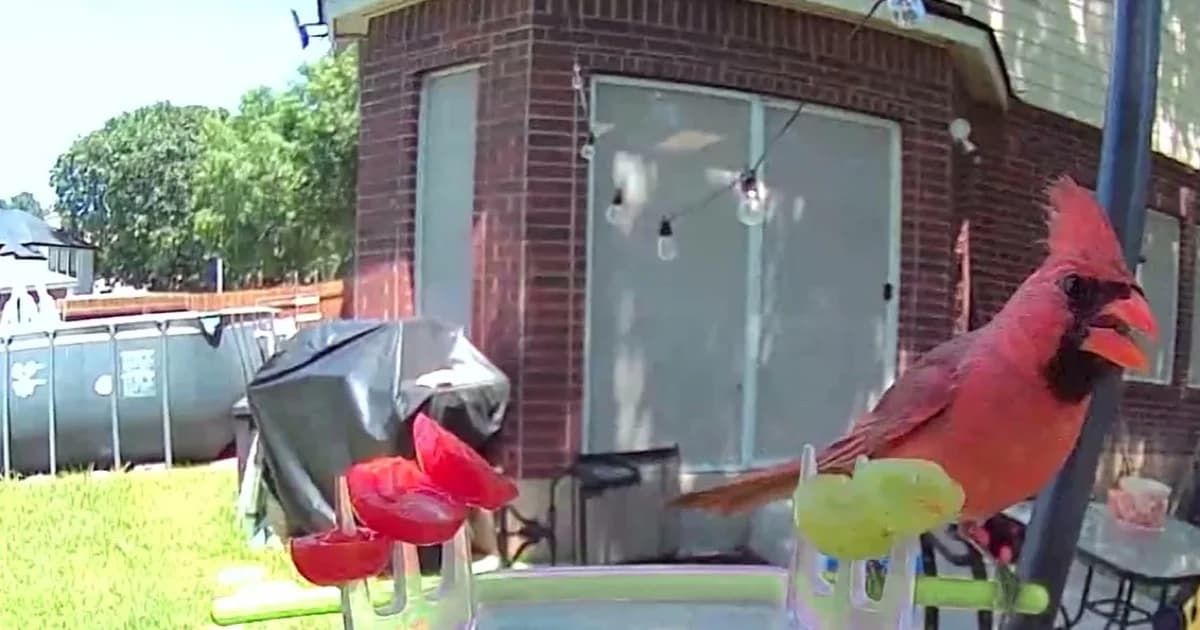
Smart bird cameras have gone from a novelty to a crowded shelf in about three years, and the marketing has converged on the same four words: AI, HD, solar, app. Those words are now on every product in the category, which makes them useless for choosing between them.
Here is what actually separates a camera that gets used from one that ends up in a drawer.
1. Focus distance, not resolution
This is the specification nobody advertises and the one that decides everything. A bird at a feeder is 15 to 30 centimetres from the lens. Most outdoor cameras are built for a driveway and cannot hold focus that close, so a 2K sensor produces a soft bird. Resolution cannot fix a focus problem.
Look for a camera that states a close-focus or macro-oriented lens. If a product page talks about resolution and never mentions focus distance, that is informative.
2. Whether it replaces your feeder, or attaches to it
Two designs exist. Integrated smart feeders are a feeder and a camera in one unit, which is simpler out of the box and means retiring the feeder already in the garden. Standalone cameras clamp onto an existing feeder, bath or rail, which keeps the setup the birds already know.
If a feeder has been in the same position for years and the local birds have learned it, replacing it resets that. Worth weighing before buying an integrated unit.
3. Power, honestly assessed
Every product in this category says solar. What matters is the battery capacity behind the panel and how the camera behaves through a cloudy fortnight. A camera that needs to come indoors to charge every few weeks stops being mounted. Ask for battery capacity in mAh and a battery-only runtime figure, not "long battery life."
4. Species recognition, with realistic expectations
Automatic bird ID is genuinely useful for learning the regulars in a yard. It is also consistently good on a clear, front-on, well-lit bird and consistently vague on a backlit one that is half out of frame. Treat it as a shortcut, not an authority. Also check whether identification requires an ongoing subscription, because that varies across the category and changes the real cost of ownership substantially.
5. Whether you can live with looking at it
This device sits in a garden, in view, every day, for years. Most of them look like security cameras because that is what they are derived from. It is a legitimate criterion.
One to watch: Birdsnap Cam 1
Birdsnap Cam 1 is a standalone bird camera that launched on Kickstarter in September 2026. It sits on the attach-to-your-existing-setup side of the split above: it mounts to a feeder, bird bath, fence or balcony rail rather than replacing the feeder.
The specification that stands out is the close-focus lens, which is point 1 on this list and the one most competing products leave unstated. Capture is triggered by a PIR infrared sensor with motion detection, and the camera records in black-and-white infrared night vision after dark. Power is a 5,200 mAh battery with a solar panel, rated for about 20 days of typical use on battery alone, with the panel topping it up in unobstructed sun. On point 4 above, Birdsnap's answer is unusually concrete: bird identification is free with no subscription tier and no species cap, and the recognition model is updated over time, through the Birdsnap app on iOS and Android. The housing is shaped after a bird in a green finish, which addresses point 5 more directly than most of the category does.
The early-bird tier is $69.99, with bundle tiers at $105 and $209, shipping to the United States with estimated delivery in October 2026. As with any crowdfunded hardware, delivery timelines on a first production run carry risk; Birdsnap states that prototype design and mould development are complete and that reliability testing is planned before shipping.
Campaign: Birdsnap Cam 1 on Kickstarter
Product information: Birdsnap

Written by
David Kim
David Kim is a technology journalist and product reviewer based in San Francisco. With a background in computer science and over 10 years covering consumer tech, he specializes in testing laptops, smartphones, smart home devices, AI tools, and software. His reviews have appeared in leading tech publications.
Embed Badge
Add this badge to your site to share this recommendation.
<a href="https://www.bestin2026.com/articles/smart-bird-feeder-cameras-2026-what-matters" target="_blank" rel="noopener"><img src="https://www.bestin2026.com/api/badge?title=Smart%20Bird%20Feeder%20Cameras%20in%202026%3A%20What%20Actually%20Matters%20Before%20You%20Buy" alt="Smart Bird Feeder Cameras in 2026: What Actually Matters Before You Buy - Best in 2026" width="200" height="50" /></a>Keep Reading
Related Content
Articles



Products
Best Espresso Machines of 2026
Cafe-quality espresso at home. We pulled thousands of shots to find the best espresso machines from beginner-friendly to prosumer.
Feb 5, 2026
Best Air Purifiers of 2026
Clean air for every room size and budget. We measured real particulate removal rates to find the air purifiers that actually work.
Feb 5, 2026
Best Standing Desks of 2026
Sit-to-stand desks that are actually worth buying. We tested 22 electric standing desks for stability, speed, and build quality.
Feb 5, 2026