
What Closing Season Tells Pool Professionals About Automation
The closing rush is the densest customer contact of the year for pool pros. What it teaches about entry-tier automation and the Betta SE Plus.
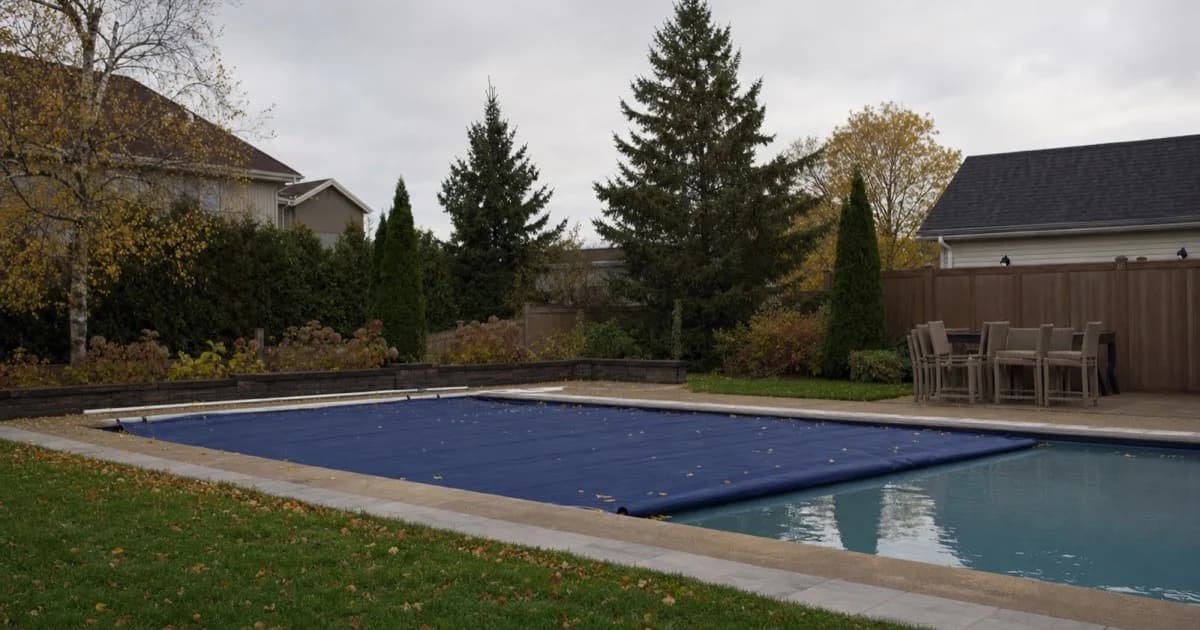
The Busiest Six Weeks, and the Best Conversations
For pool service businesses and retailers in seasonal markets, the closing rush is the densest customer contact of the year. Between mid-September and early November, a technician is standing at more poolsides, talking to more owners, than at any other point outside the spring opening.
It is also the moment when customers are most candid, because they are looking at a full basket, a stained step and a season's worth of accumulated frustration, and they are doing arithmetic about next year.
The category conversation that comes up most in that window is automation — and specifically the entry tier, where the customer's question is not "which flagship" but "is this worth it at all."
The Complaint Behind the Complaint

The autumn complaint is rarely about water chemistry. It is about labour and attention: the pool needed daily handling in a season when nobody had daily attention to give.
That is a useful diagnosis for a service professional, because it is a problem with an equipment answer rather than a chemistry answer. Continuous surface skimming addresses the specific thing the customer is describing — debris arriving faster than a human is willing to remove it, in a period when the human has stopped visiting.
The Betta SE Plus sits at the entry end of that category, which makes it the unit most relevant to the conversation that actually happens at a closing appointment.
Dual Charging, Read as a Service Consideration
SE Plus charges by solar and by AC adapter. From a homeowner's perspective, that is a convenience feature. From a service perspective it is a support-call reducer.
The failure mode of a solar-only device in a marginal season is a customer calling to report that the machine "stopped working," when the machine is simply flat after a run of overcast days. An adapter converts that call into a plug.
The numbers are workable for a technician explaining them at the poolside: 30-plus hours of continuous cleaning on a single charge, and a recharge of 5 to 6 hours in direct sunlight or 3.5 hours on the adapter. On sunny days with sufficient direct sunshine, manual charging is unnecessary.
Thirty hours of endurance means a cloudy stretch is a non-event rather than an interruption.

The Remote Is a Feature, Not a Downgrade
SE Plus is operated by a wireless remote control for mode switching. It does not have app control, and for a meaningful share of customers that is an advantage rather than a limitation.
Every app-connected device in a backyard carries an onboarding cost — an account, a network join, a pairing, a password the customer will not remember in April. For dealers and service businesses, that cost shows up as support time, usually unbilled, usually in the first two weeks after a sale.
A remote has none of that. It works from the deck, it works when the router is down, and it works for the customer who has no interest in another app. For a route business selling into a mixed customer base, the unconnected option is frequently the one that generates the fewest return visits.
What a Technician Should Say It Does
Precision here protects everyone. SE Plus runs Auto mode — continuous 24/7 surface cleaning, capturing leaves, dust, pollen, insects and pet hair before they settle to the bottom. It uses twin Salt Chlorine Tolerant motors, so it is specified for both salt and traditionally chlorinated pools. It has a shallow water safeguard, and covers above-ground and in-ground pools up to roughly 40 by 60 feet, about 2,400 square feet.
Its debris basket is a large fine-mesh 200-micron unit with a top handle for emptying, which is the part a customer touches most often and therefore the part most worth demonstrating in person.
And it is a surface skimmer. It does not vacuum the floor or clean walls. Setting that expectation at the point of sale is the single most effective way to prevent a dissatisfied customer in April, and it opens the correct follow-on conversation about floor cleaning as a separate tool.

The Objection That Comes Up Every Time
The recurring customer objection to a surface skimmer is not price and it is not performance. It is durability: whether a plastic device left floating in chlorinated or salted water for months is going to survive more than a season.
It is a fair question, and the honest answer is specific rather than reassuring. The motors are the component the water attacks, which is why salt- and chlorine-tolerance is a motor specification rather than a housing one. The casing is the component the pool surface attacks, in both directions — a hard shell marks a liner, and a liner scuffs a hard shell, which is what soft-touch casing addresses.
A technician who can name those two failure modes and point to the design decisions that address each is having a more credible conversation than one who says the unit is well built. Customers in autumn have just spent a season watching equipment fail; they are unusually receptive to specifics and unusually resistant to adjectives.
Why the Closing Appointment Is the Right Moment
Automation gets sold in spring, when the customer is optimistic and the pool is empty. It gets understood in autumn, when the customer is tired and the basket is full.
An entry-tier surface skimmer positioned during the closing visit is being evaluated against a season the customer has just finished living through, rather than against an imagined one. The demonstration is easier, the objection handling is shorter, and the customer's own memory does most of the work.
For service businesses building attach rates on equipment sales, the closing rush is dense, brief and unusually receptive — and it is a window that opens once a year, for about six weeks.
The Category View
Solar-powered robotic surface skimming has moved from novelty to a normal shelf position in the space of a few product generations, and the entry tier is where most of the unit volume in the category now sits. Betta operates a dealer program for trade partners, and the practical question for a retailer or a route operator is less about specification than about which tier matches which customer.
The answer that comes out of a closing appointment is usually the simplest one: continuous surface cleaning, endurance that outlasts a cloudy week, a control method that does not create a support obligation, and a clearly stated limit about what it does not do.

Written by
Hana Sjöberg
Hana Sjöberg is a lifestyle and home product reviewer who has tested everything from espresso machines to robot vacuums across 50+ countries. She brings a global perspective to her reviews, focusing on kitchen appliances, home goods, travel gear, and everyday essentials that make life better.
Embed Badge
Add this badge to your site to share this recommendation.
<a href="https://www.bestin2026.com/articles/betta-se-plus-pool-closing-automation" target="_blank" rel="noopener"><img src="https://www.bestin2026.com/api/badge?title=What%20Closing%20Season%20Tells%20Pool%20Professionals%20About%20Automation" alt="What Closing Season Tells Pool Professionals About Automation - Best in 2026" width="200" height="50" /></a>Keep Reading
Related Content
Articles


Products
Best Espresso Machines of 2026
Cafe-quality espresso at home. We pulled thousands of shots to find the best espresso machines from beginner-friendly to prosumer.
Feb 5, 2026
Best Laptops for Work in 2026
Whether you need a powerhouse for development or a lightweight for meetings, these are the best work laptops money can buy.
Feb 5, 2026
Best Air Purifiers of 2026
Clean air for every room size and budget. We measured real particulate removal rates to find the air purifiers that actually work.
Feb 5, 2026