
Best Fat-Tire and Moto-Style E-Bikes for Commuting 2026
How to pick a fat-tire or moto-style commuting e-bike in 2026 by scenario: theft exposure, road surface, range you can rely on, and storage reality.
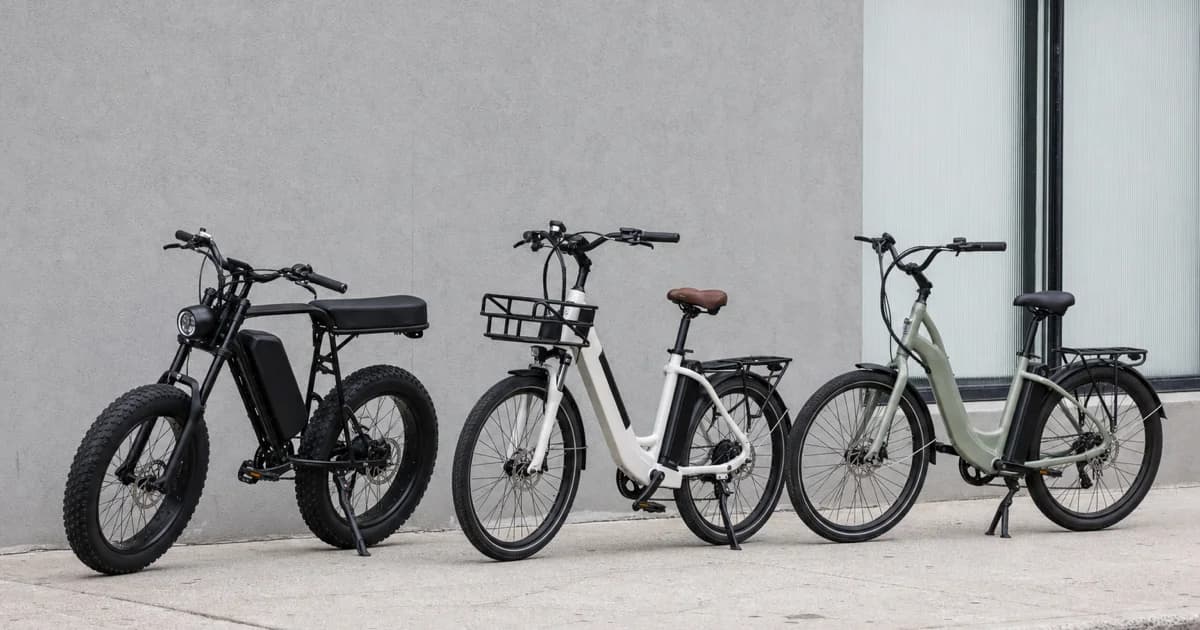
The moto-style e-bike category has gotten crowded enough that spec-sheet comparison stopped being useful. Most bikes in this segment now converge on similar numbers: 750W nominal, a 48V battery, hydraulic discs, 20-inch fat tires. The differences that actually determine whether you are happy after six months are not on the comparison table.
So this roundup is organized by scenario rather than by rank. Find the paragraph that describes your situation.
If your main problem is theft
This is the fastest-changing part of the category, and the one where the gap between models is widest.
The distinction to understand is between Bluetooth-network tracking and cellular tracking. Bluetooth systems, used by some brands in this category, rely on other people's phones passing close enough to relay a location. They need no subscription and work well in dense urban areas, but their coverage thins out wherever few phones pass.
Cellular tracking reports its own position over the mobile network and keeps working when the bike leaves the neighborhood. It is the layer that most improves the chance of recovery, and it is less common on spec sheets than the marketing around anti-theft suggests.
AOTOS Flux X26 Pro is one of the models where this is specified clearly: 4G GPS tracking plus an app plus a physical lock, with a vibration alarm. The important caveat, which applies to several brands and is regularly missed by buyers: the base Flux X26 does not include cellular tracking — it has app support only. If tracking is your reason for buying, the trim matters more than the brand.
Whatever you choose, confirm three things before ordering: whether cellular is on the specific trim, what powers the tracker if the main battery is removed, and whether connectivity carries an ongoing cost.
If your commute surface is genuinely bad
Broken pavement, frost heaves, gravel detours, rail crossings. The relevant specs are tire volume and suspension type, in that order.
Twenty-by-four-inch tires at low pressure absorb edge impacts that a narrower tire transmits straight into your hands. Suspension matters second, and the thing to look for is hydraulic front and rear rather than a coil fork with a rigid rear, which is what a lot of the segment ships. The AOTOS Flux X26 series runs dual hydraulic suspension on both trims, which is not universal at this price.
Super73 is the reference point for the moto-style aesthetic and has a large, active owner community, which is worth real money when you need a part or a fix. Aventon is the more conventional choice with a broader dealer footprint. Ride1Up built its reputation on direct-to-consumer value. Each of these is a genuinely different proposition and the right answer depends on which of style, service, or price you are optimizing.
If you need range you can rely on
Read watt-hours, not miles. Every advertised range figure in this industry is produced at the lowest assist level on flat ground, and none of them survive contact with a hilly commute in a high assist mode.
A useful conversion: a heavy fat-tire e-bike at moderate assist consumes somewhere in the range of 18 to 22 watt-hours per mile. Divide the pack's watt-hours by that and you get a number you can plan around. The Flux X26 Pro's 48V/21Ah pack is roughly 1008 Wh, which by that arithmetic is a real-world 45 to 55 miles rather than the advertised 70. The base X26's 48V/18Ah pack scales down proportionally from its advertised 50.
That is not a criticism of the claim, which is calculated the same way everyone else's is. It is a reminder to do the division yourself for every bike on your list.
If you are carrying weight
Check the maximum load rating, not just the frame's appearance. The Flux X26 series is rated to 330 lb total, which covers most riders plus a loaded pannier set.
Also check whether the bike has anywhere to put things. Integrated storage is rarer than it should be in this category — the Flux X26 Pro includes an under-frame storage bag, the base model does not, and many competitors leave it entirely to aftermarket racks.
If you live above the ground floor
Read this paragraph before any other.
Moto-style fat-tire e-bikes weigh between roughly 70 and 100 pounds. The Flux X26 series is 97 lb. There is no version of this category that is light, and the weight is not a flaw to be engineered away — it is the direct consequence of a large battery, dual suspension, a powerful motor and fat tires all being present at once.
If you do not have ground-floor storage, a bike room, a ramp, or a secure outdoor spot, this entire category is the wrong purchase and a lighter mid-drive commuter will make you happier. This comes up often among buyers in this segment, and it is foreseeable before the purchase.
Things worth checking on any bike in this category
Safety certification. Look for UL 2849 for the electrical system and UL 2271 for the battery pack. Given the fire record of uncertified imported packs, this is not a box-ticking exercise. The Flux X26 series is TUV-certified to both.
Service access. Direct-to-consumer e-bikes are excellent until something breaks. Ask what the actual repair path is. AOTOS routes service through a network of over 1,800 partner bike shops; other brands run dealer networks, and some run nothing at all, which means shipping a 97-pound object back to a warehouse.
The legal speed question. A bike's top speed determines which regulatory category it falls into, and path access varies by state and by municipality. Confirm the rules for your state, your city and your specific route before you buy.
Warranty and returns. One year and a 30-day return window is roughly the category norm — the Flux X26 series matches it. Read what the return actually costs you in shipping on an object this heavy.
The honest summary of this category in 2026: the motors and batteries have converged, the differentiation has moved to connectivity and service, and the weight remains the thing most likely to make someone regret the purchase. Pick by your storage situation first, your theft exposure second, and the spec sheet a distant third.
Specifications cited for the Flux X26 series are taken from the manufacturer's published product page, retrieved 11 August 2026. Competing models are described in general terms only.

Written by
David Kim
David Kim is a technology journalist and product reviewer based in San Francisco. With a background in computer science and over 10 years covering consumer tech, he specializes in testing laptops, smartphones, smart home devices, AI tools, and software. His reviews have appeared in leading tech publications.
Embed Badge
Add this badge to your site to share this recommendation.
<a href="https://www.bestin2026.com/articles/best-fat-tire-moto-style-e-bikes-commuting-2026" target="_blank" rel="noopener"><img src="https://www.bestin2026.com/api/badge?title=Best%20Fat-Tire%20and%20Moto-Style%20E-Bikes%20for%20Commuting%202026" alt="Best Fat-Tire and Moto-Style E-Bikes for Commuting 2026 - Best in 2026" width="200" height="50" /></a>Keep Reading
Related Content
Articles



Products
Best Espresso Machines of 2026
Cafe-quality espresso at home. We pulled thousands of shots to find the best espresso machines from beginner-friendly to prosumer.
Feb 5, 2026
Best Air Purifiers of 2026
Clean air for every room size and budget. We measured real particulate removal rates to find the air purifiers that actually work.
Feb 5, 2026
Best Standing Desks of 2026
Sit-to-stand desks that are actually worth buying. We tested 22 electric standing desks for stability, speed, and build quality.
Feb 5, 2026