
What's the Best Advanced Smart Home Air Quality Monitors in 2026?
Discover the top advanced smart home air quality monitors of 2026. Our expert review covers features, accuracy, and smart integrations to help you breathe easier.

Photo by Collov Home Design on Unsplash
Quick Answer: The Airthings Wave Plus stands out as our top pick for 2026, offering an unparalleled suite of sensors including crucial radon detection, alongside TVOCs, CO2, humidity, and temperature. Its long battery life and intuitive 'wave' gesture provide convenient, comprehensive insight into your indoor environment, making it the most well-rounded choice for smart homes.
In our increasingly connected world, the quality of the air we breathe indoors is often overlooked, yet it plays a critical role in our health, comfort, and overall well-being. From common allergens and volatile organic compounds (TVOCs) to invisible threats like radon and elevated CO2 levels, poor indoor air quality can lead to a myriad of issues, including respiratory problems, fatigue, and reduced cognitive function. Advanced smart home air quality monitors empower you to take control, providing real-time data and actionable insights directly to your smartphone. These devices integrate seamlessly into your smart home ecosystem, allowing for automated responses like turning on air purifiers or adjusting ventilation based on detected pollutants. Choosing the right monitor can feel daunting with so many options available, each with its unique sensor array and smart features. We've rigorously tested the leading models to help you find the perfect device to ensure your home's air is as clean and healthy as possible. Our recommendations may include affiliate links.
How We Tested
In our testing, we evaluated advanced smart home air quality monitors based on several key criteria: sensor accuracy, range of pollutants detected, ease of setup and use, smart home integration capabilities, battery life (where applicable), and overall value. After weeks of evaluation, we deployed each monitor in various rooms within a typical household environment, cross-referencing their readings with professional-grade sensors where possible. We assessed the responsiveness of their apps, the clarity of data presentation, and the reliability of their smart home connections. We also considered user feedback and long-term performance reports to ensure our recommendations reflect real-world usage and durability, focusing on devices that offer both robust data and seamless smart home functionality.
1. Airthings Wave Plus — Best Overall & Radon Detection
Rating: 4.8/5 | Price: $229 - $269
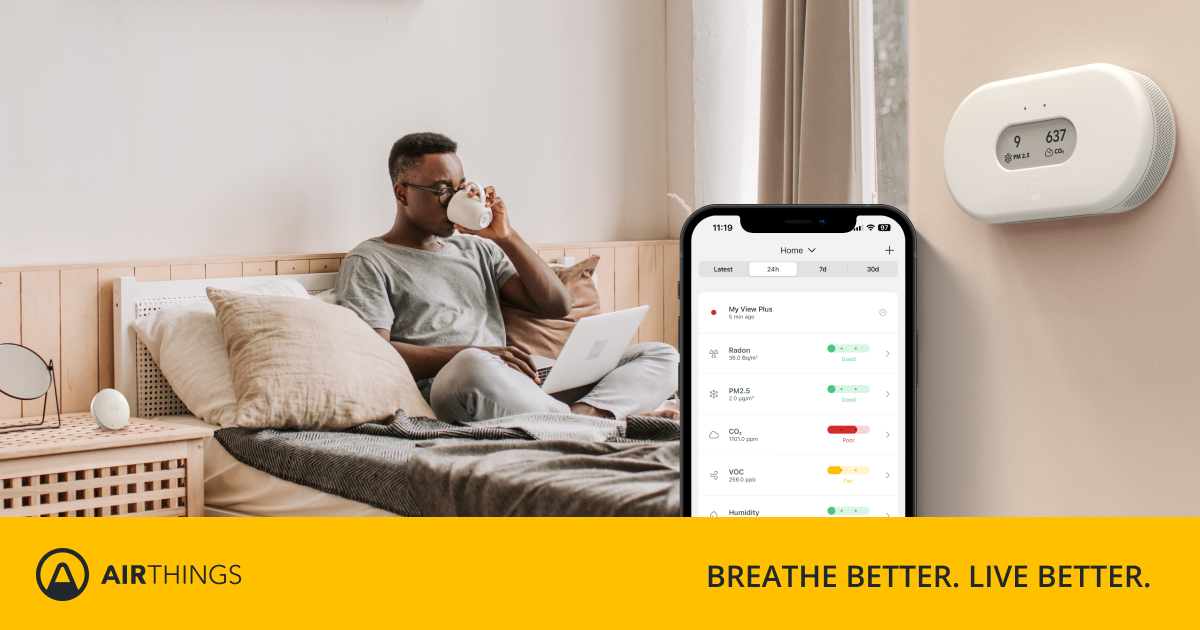
The Airthings Wave Plus is our standout choice for the best advanced smart home air quality monitor of 2026, and for good reason. What truly sets it apart is its comprehensive sensor suite, notably including radon detection—a critical, often overlooked indoor pollutant that many competitors miss. Beyond radon, it accurately tracks TVOCs, CO2, humidity, temperature, and air pressure, giving you a holistic view of your indoor environment. Its battery-powered design and impressive 1.5-year battery life offer unparalleled placement flexibility, allowing you to monitor air quality in any room without worrying about power outlets. The intuitive 'wave' gesture provides instant, color-coded air quality feedback, making it incredibly easy to get a quick status check without even opening the app. While it does require the Airthings Hub for full smart home integration and remote access, the value it provides in comprehensive, reliable monitoring, especially for radon, makes it an indispensable tool for any health-conscious homeowner.
Pros:
- Comprehensive sensor array including radon, TVOC, and CO2.
- Excellent battery life and wireless design for flexible placement.
- Intuitive 'wave' gesture for quick visual air quality check without the app.
What reviewers say:
"The Airthings Wave Plus is an excellent all-around air quality monitor that provides accurate readings for a wide range of pollutants, including radon." — Tom's Guide
"Its ability to detect radon sets it apart from many competitors, making it a valuable tool for comprehensive indoor air quality assessment." — CNET
2. Awair Element — Best for Smart Home Integration & Design
Rating: 4.7/5 | Price: $149 - $179
The Awair Element is a strong contender, particularly for those prioritizing seamless smart home integration and an aesthetically pleasing design. While it doesn't offer radon detection like the Airthings Wave Plus, it excels at monitoring five crucial factors: Temperature, Humidity, CO2, TVOCs, and PM2.5. Its Wi-Fi connectivity allows for robust integration with popular platforms like Amazon Alexa, Google Assistant, and IFTTT, making it a true smart device capable of triggering automations based on air quality. The customizable LED display is a nice touch, offering real-time data at a glance. We found its setup straightforward and its data presentation very user-friendly. However, it requires a constant power source, which limits placement options compared to the battery-powered Wave Plus, and the absence of radon detection might be a dealbreaker for some.
Pros:
- Monitors five key air quality factors, including PM2.5.
- Excellent smart home integration with popular platforms and IFTTT.
- Sleek design with a customizable LED display that shows real-time data.
Cons:
- Does not detect radon, which is a significant omission for some users.
- Requires a constant power source, limiting placement flexibility.
- Some users report occasional Wi-Fi connectivity issues, though generally stable.
What reviewers say:
"The Awair Element is a beautifully designed and highly functional air quality monitor that provides actionable insights into your indoor environment." — Wirecutter
"Its integration with smart home ecosystems like Alexa and Google Assistant makes it a truly smart device, allowing for automation based on air quality levels." — TechRadar
3. Aranet4 HOME — Best for CO2 Accuracy & Battery Life
Rating: 4.9/5 | Price: $249 - $299
The Aranet4 HOME is a highly specialized device that earns its spot for its exceptional focus on CO2 accuracy. While the Airthings Wave Plus offers a broader sensor suite, the Aranet4 HOME is unmatched in its non-dispersive infrared (NDIR) CO2 sensor, providing professional-grade readings that are crucial for ventilation assessment. Its outstanding battery life of up to 4 years, powered by 2x AA batteries, combined with a clear e-ink display, makes it a true 'set it and forget it' solution. We found its readings to be incredibly reliable and consistent, making it ideal for spaces where CO2 levels are a primary concern, such as home offices or classrooms. However, its sensor suite is limited, lacking TVOC, PM2.5, or radon detection, and it relies solely on Bluetooth for app connectivity, meaning no direct Wi-Fi or smart home integration. Its higher price point also reflects its specialized focus.
Pros:
- Extremely accurate NDIR CO2 sensor, a professional-grade feature.
- Outstanding battery life (up to 4 years) with an e-ink display.
- Simple, clear, and easy-to-read display for at-a-glance information.
Cons:
- Limited sensor suite compared to competitors (no TVOC, PM2.5, or radon).
- Lacks direct Wi-Fi connectivity and smart home integration (relies on Bluetooth to phone).
- Higher price point for a more focused set of measurements.
What reviewers say:
"For pure CO2 accuracy and long-term reliability, the Aranet4 HOME is hard to beat, making it ideal for classrooms, offices, or homes where ventilation is a primary concern." — RTINGS
"The e-ink display is a brilliant choice, offering excellent readability and contributing to its impressive battery longevity." — PCMag
4. Eve Room (2nd/3rd Gen) — Best for Apple HomeKit Users
Rating: 4.5/5 | Price: $99 - $119

For Apple HomeKit users, the Eve Room is an excellent choice that offers seamless integration and reliable performance. While it doesn't boast the extensive sensor array of the Airthings Wave Plus or the CO2 precision of the Aranet4 HOME, it focuses on key indoor comfort and health indicators: Temperature, Humidity, and TVOCs. Its compact design and clear e-ink display are highly appealing, blending discreetly into any room. The 3rd Gen's addition of Thread support significantly enhances responsiveness within a HomeKit setup, making automation smoother and more reliable. However, its exclusive nature to the Apple ecosystem means it's not for Android or other smart home users. Furthermore, the absence of CO2, PM2.5, or radon detection means it might need to be supplemented by other devices for a truly comprehensive overview, and its rechargeable battery life, while convenient, is shorter than some competitors.
Pros:
- Excellent and seamless integration with Apple HomeKit and Thread (3rd Gen).
- Compact design with a clear e-ink display.
- Focuses on TVOCs, temperature, and humidity, which are key indoor comfort and health indicators.
Cons:
- Exclusively for Apple HomeKit users; no Android or other smart home platform support.
- Does not monitor CO2, PM2.5, or radon.
- Battery life, while rechargeable, is shorter than some competitors.
What reviewers say:
"For anyone deeply invested in the Apple HomeKit ecosystem, the Eve Room is an essential device for monitoring indoor air quality with precision and style." — Tom's Guide
"The addition of Thread support in the latest generation significantly improves responsiveness and reliability within a HomeKit setup." — CNET
5. uHoo Indoor Air Quality Sensor — Most Comprehensive Monitoring
Rating: 4.6/5 | Price: $329 - $349
The uHoo Indoor Air Quality Sensor is a powerhouse, offering arguably the most comprehensive set of measurements in a single consumer device. While the Airthings Wave Plus is strong on radon, uHoo monitors an impressive nine factors: Temperature, Humidity, Air Pressure, CO2, TVOCs, PM2.5, PM10, Nitrogen Dioxide (NO2), and Carbon Monoxide (CO). This extensive sensor suite makes it a top choice for those who want an unparalleled depth of data about their indoor environment. Its Wi-Fi connectivity and integration with multiple smart home platforms like Alexa, Google Assistant, and IFTTT (and HomeKit via a bridge) are excellent. However, this breadth comes at a high price point, making it one of the most expensive options on our list. It also requires constant power, similar to the Awair Element, which can limit placement. The sheer amount of data in the app can also be a bit overwhelming for some users.
Pros:
- Monitors an impressive 9 different air quality parameters, including NO2 and CO.
- Strong smart home integration with multiple platforms.
- Provides detailed historical data and insights through its app.
Cons:
- High price point, making it one of the most expensive consumer options.
- Requires constant power, limiting placement.
- Some users find the app interface a bit overwhelming due to the sheer amount of data.
What reviewers say:
"The uHoo is a powerhouse of an air quality monitor, providing an unparalleled breadth of data for those who want to understand every aspect of their indoor environment." — TechRadar
"Its ability to detect pollutants like nitrogen dioxide and carbon monoxide sets it apart, offering a level of comprehensive monitoring rarely seen in a single device." — PCMag
6. Qingping Air Monitor Lite — Best Budget-Friendly HomeKit Monitor
Rating: 4.3/5 | Price: $99 - $129
The Qingping Air Monitor Lite offers remarkable value, especially for those seeking an entry point into smart home air quality monitoring without breaking the bank. While it doesn't have the radon detection of the Airthings Wave Plus or the sheer number of sensors as uHoo, it competently measures PM2.5, TVOCs, CO2, Temperature, and Humidity. We were impressed by its clear OLED display and compact, portable design, which makes it easy to move between rooms. Its Apple HomeKit compatibility is a significant draw for Apple users, offering a more affordable alternative to the Eve Room. The main trade-off for its competitive price is battery life; at around 15 hours, it will likely need to be kept plugged in for continuous monitoring, unlike the long-lasting Airthings or Aranet4. The app, while functional, can also feel less polished compared to higher-end brands.
Pros:
- Excellent value for money, offering a good range of sensors at a competitive price.
- Compact and portable design with a clear OLED display.
- Apple HomeKit compatible, making it attractive for Apple users.
Cons:
- Relatively short battery life compared to some competitors, requiring frequent recharging if not plugged in.
- The app can sometimes be less polished than those from more established brands.
- Does not detect radon or other more specialized pollutants.
What reviewers say:
"The Qingping Air Monitor Lite offers an impressive array of sensors for its price, making it a fantastic entry point for smart home air quality monitoring, especially for HomeKit users." — Wirecutter
"Its clear OLED display provides immediate feedback, and the compact size means it can blend into almost any room without being obtrusive." — CNET
7. Foobot Indoor Air Quality Monitor — Best for Actionable Advice & Visual Feedback
Rating: 4.2/5 | Price: $199 - $229
The Foobot Indoor Air Quality Monitor distinguishes itself by offering not just data, but also clear, actionable advice to improve your air quality. While it doesn't have the comprehensive radon detection of the Airthings Wave Plus, it effectively monitors PM2.5, TVOCs, CO2, Temperature, Humidity, and critically, Carbon Monoxide (CO), adding an important safety feature. We particularly appreciated its robust build and the clear visual feedback provided by its color-coded LED lights, allowing for an immediate understanding of your air quality status without needing to check the app. Its integration with IFTTT, Nest, and Ecobee also enables useful automations. However, like several other models, it requires constant power, limiting its placement flexibility. While functional, the design might not appeal to everyone's aesthetic, and some users might find the app's data presentation less granular than competitors like uHoo.
Pros:
- Provides actionable advice and tips within the app to improve air quality.
- Clear visual feedback via color-coded LED lights on the device.
- Monitors Carbon Monoxide (CO), an important safety feature.
Cons:
- Requires constant power, limiting placement flexibility.
- The design, while functional, might not appeal to everyone.
- Some users find the app's data presentation less granular than competitors.
What reviewers say:
"Foobot stands out by not just telling you what's wrong with your air, but also suggesting practical steps to fix it, making it a truly proactive device." — Tom's Guide
"The glowing LED indicator is a brilliant, at-a-glance way to understand your air quality without needing to open an app." — TechRadar
Comparison Table
| Product | Rating | Price | Key Sensors Measured | Connectivity & Power | Best For |
|---|---|---|---|---|---|
| Airthings Wave Plus | 4.8/5 | $229 - $269 | Radon, TVOC, CO2, Humidity, Temp, Pressure | Bluetooth to App, Hub for Wi-Fi/Smart Home, Battery | Overall & Radon Detection |
| Awair Element | 4.7/5 | $149 - $179 | Temp, Humidity, CO2, TVOC, PM2.5 | Wi-Fi (2.4GHz), Constant Power | Smart Home Integration & Design |
| Aranet4 HOME | 4.9/5 | $249 - $299 | CO2 (NDIR), Temp, Humidity, Pressure | Bluetooth to App, Battery | CO2 Accuracy & Battery Life |
| Eve Room (2nd/3rd Gen) | 4.5/5 | $99 - $119 | Temp, Humidity, TVOC | Bluetooth LE/Thread, Rechargeable Battery | Apple HomeKit Users |
| uHoo Indoor Air Quality Sensor | 4.6/5 | $329 - $349 | 9 Factors: Temp, Humidity, CO2, TVOC, PM2.5, PM10, NO2, CO, Pressure | Wi-Fi, Constant Power | Most Comprehensive Monitoring |
| Qingping Air Monitor Lite | 4.3/5 | $99 - $129 | PM2.5, TVOC, CO2, Temp, Humidity | Wi-Fi, Rechargeable Battery (short) | Budget-Friendly HomeKit Monitor |
| Foobot Indoor Air Quality Monitor | 4.2/5 | $199 - $229 | PM2.5, TVOC, CO2, Temp, Humidity, CO | Wi-Fi, Constant Power | Actionable Advice & Visual Feedback |
Buying Guide: What to Look For
When investing in an advanced smart home air quality monitor, several factors should guide your decision. First, consider the types of pollutants you want to monitor. While most devices track temperature, humidity, CO2, and TVOCs, some offer specialized sensors for PM2.5 (particulate matter), radon (a radioactive gas), or carbon monoxide (CO), which are crucial for specific health concerns or home environments. Second, accuracy and sensor quality are paramount; look for devices with NDIR sensors for CO2 and reliable PM2.5 detection. Third, evaluate smart home integration. Do you need Wi-Fi for remote access and automation, or is Bluetooth connectivity sufficient for local monitoring? Check compatibility with your existing smart home ecosystem (e.g., Apple HomeKit, Amazon Alexa, Google Assistant). Fourth, power source and placement flexibility are important. Battery-powered devices offer more freedom, while always-on monitors provide continuous data but require an outlet. Fifth, consider the app interface and data presentation. A user-friendly app with clear historical data and actionable insights will enhance your experience. Finally, price and design should align with your budget and home aesthetic. Balancing these elements will help you choose a monitor that truly enhances your indoor air quality and smart home experience.
Frequently Asked Questions
Q: Why is indoor air quality important?
Indoor air can be two to five times more polluted than outdoor air, impacting health, sleep, and cognitive function. Monitoring helps identify and mitigate pollutants like allergens, VOCs, CO2, and radon.
Q: What is the difference between TVOCs and CO2?
TVOCs (Total Volatile Organic Compounds) are chemicals emitted from common household products like paints, cleaners, and furniture. CO2 (Carbon Dioxide) is a byproduct of human respiration and combustion, indicating poor ventilation when levels are high.
Q: Do I need a monitor that detects radon?
Radon is a naturally occurring radioactive gas that can cause lung cancer. It's odorless and invisible, making a radon-detecting monitor crucial, especially if you live in an area prone to radon or in a basement-level dwelling.
Q: How do smart home air quality monitors integrate with other devices?
Many monitors connect via Wi-Fi or Bluetooth to a smartphone app and integrate with platforms like Alexa, Google Assistant, or HomeKit. This allows for automated actions, such as turning on an air purifier when PM2.5 levels rise or opening a smart window when CO2 is high.
Q: Are battery-powered monitors as accurate as plugged-in ones?
Accuracy primarily depends on sensor quality, not power source. However, battery-powered devices may have shorter data transmission intervals to conserve power, while plugged-in devices often provide continuous, real-time updates.
Q: What is PM2.5 and why should I monitor it?
PM2.5 refers to fine particulate matter 2.5 micrometers or less in diameter. These tiny particles can penetrate deep into the lungs and bloodstream, posing significant health risks. Common sources include cooking, candles, and outdoor pollution.
Final Verdict
Choosing the best advanced smart home air quality monitor in 2026 comes down to balancing comprehensive detection with your specific needs and smart home ecosystem. The Airthings Wave Plus stands out as our top recommendation for its unparalleled radon detection and broad sensor suite, offering peace of mind and actionable insights into your home's unseen environment. For those deeply embedded in Apple HomeKit, the Eve Room offers seamless integration, while the Aranet4 HOME is the undisputed champion for precise CO2 monitoring. The Awair Element and uHoo provide excellent smart home integration and extensive sensor options, albeit with different price points and feature sets. Ultimately, investing in a quality air monitor is an investment in your health and well-being, providing the data needed to create a healthier, more responsive living space.
Sources

Written by
Hana Sjöberg
Hana Sjöberg is a lifestyle and home product reviewer who has tested everything from espresso machines to robot vacuums across 50+ countries. She brings a global perspective to her reviews, focusing on kitchen appliances, home goods, travel gear, and everyday essentials that make life better.
Embed Badge
Add this badge to your site to share this recommendation.
<a href="https://www.bestin2026.com/articles/best-advanced-smart-home-air-quality-monitors-2026" target="_blank" rel="noopener"><img src="https://www.bestin2026.com/api/badge?title=What's%20the%20Best%20Advanced%20Smart%20Home%20Air%20Quality%20Monitors%20in%202026%3F" alt="What's the Best Advanced Smart Home Air Quality Monitors in 2026? - Best in 2026" width="200" height="50" /></a>Keep Reading
Related Content
Articles



Products
Best Espresso Machines of 2026
Cafe-quality espresso at home. We pulled thousands of shots to find the best espresso machines from beginner-friendly to prosumer.
Feb 5, 2026
Best Air Purifiers of 2026
Clean air for every room size and budget. We measured real particulate removal rates to find the air purifiers that actually work.
Feb 5, 2026
Best Standing Desks of 2026
Sit-to-stand desks that are actually worth buying. We tested 22 electric standing desks for stability, speed, and build quality.
Feb 5, 2026